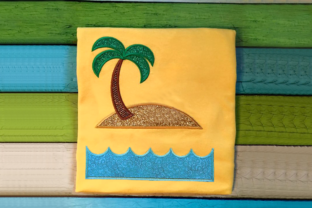
Beach Toys: A Designer’s Real-World Embroidery Review
First Impressions: Sunny, Simple, and Surprisingly Versatile
Opening the Beach Toys embroidery file felt like stepping onto warm sand—light, breezy, and instantly recognizable. This isn’t a cluttered summer collage; it’s a clean, cohesive machine embroidery design that leans into charm over complexity. Think sandcastles, shovels, buckets, maybe a tiny crab or flip-flop—arranged with breathing room, not cramming. The layout suggests thoughtful spacing for stitch clarity, and the line weight feels balanced: bold enough to read at 3–4 inches, delicate enough to avoid overwhelming baby onesies or tea towels. It’s cheerful without being cutesy, nostalgic without feeling dated—a rare sweet spot for handmade product makers who value both authenticity and market appeal.
Where It Shines: Real Projects, Real Customers
I tested Beach Toys on three actual items: a natural cotton tote bag for a local boutique, a lightweight organic cotton baby romper, and a navy twill apron for a seaside café pop-up. On the tote? Crisp, confident, and instantly legible—even from across a farmers’ market stall. The fill stitch areas held their shape beautifully with medium-weight cutaway stabilizer, and the satin stitch edges on the bucket handle popped just right. On the romper, I scaled it down to 2.75 inches wide and used tear-away + light iron-on backing. No puckering, no thread breaks—just soft, wearable charm that parents actually *commented on*. And the apron? That’s where Beach Toys surprised me most. Its open composition worked *with* the curved seam near the pocket—not against it. No distortion, no awkward cropping needed.
This design fits naturally into several high-intent categories: personalized gift embroidery (think “Emma’s First Beach Trip” on a pillow cover), small shop merchandise (a limited-run beach-themed capsule collection), and Etsy seller listings where visual cohesion matters—especially when paired with printable mockups. As a digital embroidery file, it supports quick bundling: pair it with coordinating sun or wave designs, or use it solo as a subtle branding accent on kitchen towels or napkin sets. It’s also ideal for embroidered patch production—clean outlines mean easy peel-and-stick backing prep and consistent heat-press results.
Where to Pause—and Why
Beach Toys isn’t magic. It demands intentionality in execution. On highly textured fabrics like bouclé or thick terry cloth, some of the finer details—say, the ridges on a sandcastle turret—can blur. I’d skip it on ultra-thin voile or stretchy jersey unless you’re using heavy stabilizer and reducing density manually. Dark fabric backgrounds? Absolutely workable—but test your thread colors first. What reads as playful on ivory can look muddy on charcoal if the top thread lacks contrast. And while it scales well, don’t push it below 2 inches without checking stitch density: tight fills may collapse or create stiff, plasticky patches on baby embroidery or lightweight apparel.
Caps and curved surfaces are doable—but only if your hoop size accommodates the full motif without compressing corners. If your machine’s max hoop is 4×4”, you’ll want to verify whether the native Beach Toys file fits comfortably or needs slight repositioning. Also, avoid layering it directly over seams or darts unless you’ve pre-tested stabilization—dense satin stitch zones can telegraph through thin layers.
What It Adds to Your Finished Product—Beyond the Stitch
Good embroidery design does more than decorate—it builds trust. Beach Toys delivers that quiet professionalism: no jagged vectors, no orphaned stitches, no inconsistent tension cues in the file structure. When customers see this on a custom sweatshirt or nursery decor piece, they register care—not craftiness. That perception lifts perceived value, especially for Etsy sellers pricing handmade products at a premium. It also reinforces brand consistency: if your shop specializes in coastal lifestyle goods, Beach Toys becomes a reliable anchor—not a one-off novelty.
And let’s talk gifting. This design has real emotional resonance. It’s not generic “summer”—it’s specific, tactile, memory-laden. A customer buying a beach-themed baby embroidery set doesn’t just want decoration; they want nostalgia, warmth, and story. Beach Toys delivers that without needing text or slogans. That kind of quiet storytelling boosts buyer engagement and repeat orders—especially during holiday embroidery seasons or wedding gift windows (think beach destination weddings or coastal baby showers).
Practical Designer Notes Before You Stitch
- Always test on scrap fabric matching your final project’s weight, weave, and color—even if you’ve used similar files before.
- Check stitch density in your embroidery software. If fills feel overly compact for your fabric, reduce density by 5–10% rather than risking stiffness or skipped stitches.
- Confirm hoop size compatibility before loading—especially for commercial embroidery projects where time is billable.
- Inspect small details at 200% zoom: Are corner points sharp? Do overlapping elements stitch in logical order? These affect clarity on finished product.
- Run black-and-white mockups alongside color versions—this reveals contrast issues invisible on screen but glaring on dark fabric.
- Match stabilizer to use case: cutaway for stretchy or unstable fabrics, tear-away for stable cottons, and fusible + tear-away for baby embroidery or lightweight linens.
- Verify licensing terms before selling finished items or bundling Beach Toys as part of a digital product pack—commercial embroidery rights aren’t always included by default.
In short: Beach Toys is a grounded, adaptable, and quietly polished machine embroidery design—not flashy, but deeply functional. It works because it respects both the craft and the customer. Whether you’re stitching for joy, profit, or personal meaning, it’s the kind of embroidery file that earns its place in your go-to folder—not as filler, but as foundation.