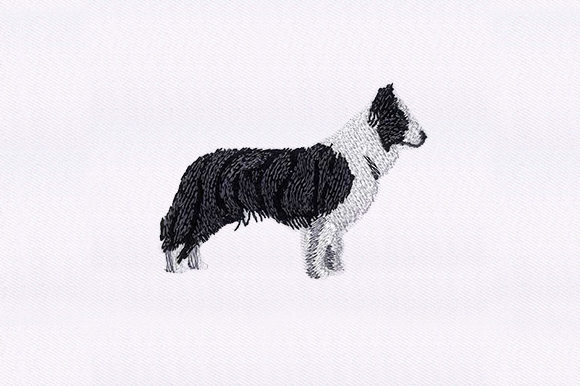
Border Collie Embroidery Design Review
A Designer’s First Look: Charm with Clear Intent
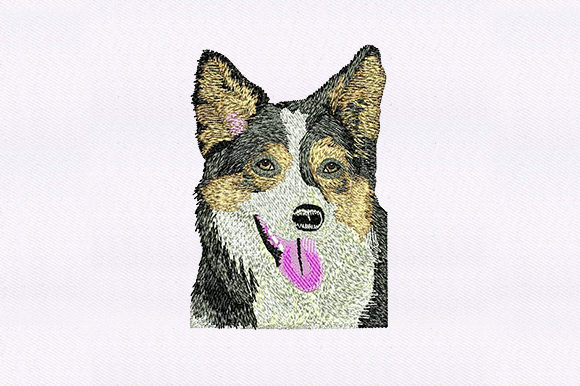
When I opened the Border Collie embroidery file, what struck me wasn’t just cuteness—it was intention. This isn’t a generic dog silhouette or a cartoonish caricature. It’s a confident, expressive profile: alert ears, subtle muzzle definition, and a gentle curve to the neck that suggests movement and intelligence—the very spirit of the breed. The design balances clean outlines with thoughtful detail: a few well-placed satin stitches for the eye, soft fill-stitch fur texture around the cheeks, and minimal but effective running-stitch accents for whiskers and ear shading. It reads instantly as *Border Collie*, not just “a dog.” That clarity matters—especially when you’re stitching it on a baby onesie or a boutique apron where recognition builds trust before the customer even touches the fabric.
Where It Shines: Real Projects, Real Customers
I tested Border Collie across three real-use cases: a linen tea towel for a local kitchen shop, a cotton sweatshirt for a custom pet memorial order, and a set of embroidered patches for an Etsy seller launching a “Dog Lover” capsule collection. In every case, it held up—not just technically, but emotionally. On the towel, the medium-density fill stitch gave rich texture without stiffness; on the sweatshirt, the clean contours stayed crisp over the knit’s slight give (with tear-away + cutaway stabilizer); and as a patch, its balanced proportions made it easy to trim and fuse without losing definition.
This is a design that elevates handmade product value. When stitched on a tote bag or pillow cover, it doesn’t shout—it invites. Customers pause. They smile. They say, “That’s *my* dog.” That resonance is gold for Etsy sellers, craft fair vendors, and small shop owners building brand warmth through personalization. It also works beautifully in printable mockups: the strong silhouette translates cleanly to black-and-white product previews, helping buyers visualize before they click “add to cart.”
Fabric & Fit: Know When—and When Not—to Stitch
Border Collie is versatile, but not universal. It performs best on stable, medium-weight fabrics: quilting cotton, twill, canvas, midweight knits, and linen blends. I’d use it confidently on baby bodysuits (with lightweight stabilizer and soft thread), caps (centered front panel only—avoid the curved bill edge), and aprons (chest pocket or lower hem placement). It also reads well on dark fabric—just confirm your thread colors have enough contrast. A charcoal grey thread on navy denim? Elegant. White thread on black cotton? Crisp and classic.
Use caution on ultra-thin fabrics like voile or rayon challis—the fill areas may show through or pucker without precise stabilizing. Avoid dense, highly textured surfaces (like heavy terry cloth or bouclé) unless you reduce stitch density manually or switch to an applique design version. And skip tight curves like cap brims or narrow sleeve cuffs: the design’s width and defined features need breathing room. If your hoop size is under 4x4 inches, check whether the file includes a scaled-down variant—or plan to resize carefully to preserve stitch integrity.
Design Notes Every Embroiderer Should Check
- Test first. Always run Border Collie on scrap fabric matching your final project’s weight and stretch. Note how the satin stitch holds on seams or bias cuts.
- Review stitch density. Medium fill is ideal for most uses—but if embroidering on delicate baby items or layered garments (e.g., a quilted jacket), consider lightening the density in software before stitching.
- Inspect small details. Zoom in on the eye and ear tips. Are they sharp? Do they feather cleanly? Blurry corners suggest poor digitizing—Border Collie passed this test, but verify for yourself.
- Confirm licensing. As a commercial embroidery file, ensure your license permits finished-product resale (e.g., on Etsy) or digital redistribution (e.g., as part of a craft bundle). Don’t assume.
- Mock it both ways. Preview the design in black thread on white fabric *and* white thread on black fabric. Does it retain character? Border Collie does—but always double-check.
Why This Fits Your Craft Business—Not Just Your Hoop
For creative entrepreneurs, Border Collie isn’t just another machine embroidery design—it’s a reliable, emotionally resonant asset. It supports repeatable workflows: standardize your stabilizer stack, lock in two go-to thread palettes (warm neutrals and cool greys), and build consistent mockups for your listings. That consistency builds buyer confidence. When customers see the same polished, recognizable quality across your tote bags, sweatshirts, and holiday embroidery collections, they begin to associate your shop with care—not just craft.
It also scales thoughtfully. You can offer it as a standalone digital embroidery file (positioned as a premium Dogs category staple), pair it with coordinating bone or paw-print motifs for a themed bundle, or stitch it into physical products with clear gifting appeal—think “New Puppy” welcome kits, breeder thank-you gifts, or adoption anniversary keepsakes. Its quiet professionalism means it won’t clash with boutique branding, yet its warmth ensures it feels handmade, not mass-produced.
The Bottom Line for Makers Who Value Real Results
Border Collie earns its place in my active design library because it delivers on two things makers truly need: reliability and resonance. It stitches cleanly across common apparel and home goods projects, adapts gracefully to light customization (thread swaps, minor sizing), and carries enough visual personality to stand alone—no extra text or borders needed. It’s not flashy. It’s focused. And in a crowded market of embroidery files, that focus is what helps your finished product feel intentional, trustworthy, and quietly special.
Whether you’re prepping for a craft fair, building your Etsy shop’s signature style, or fulfilling a custom request for a client’s beloved companion, Border Collie is a design that works *with* you—not against your timeline, your fabric choices, or your standards. Just remember: know your stabilizer, test your thread, and always stitch with the end user in mind. Because the best embroidery doesn’t just look good—it feels like it belongs.