Kangaroo Embroidery Design Review
A First Impression: Bold, Minimal, and Uniquely Australian
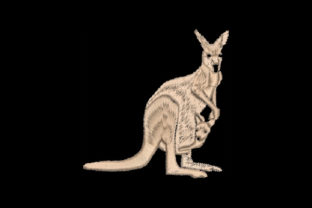
As an embroidery designer who’s developed collections for boutique apparel brands for over twelve years, my first glance at the Kangaroo design stopped me mid-scroll. It’s not fussy—it’s confident. The silhouette is clean and instantly recognizable, with strong contour lines and a grounded, upright posture that reads as both playful and dignified. Because it’s a single-color machine embroidery design, there’s no visual noise—just one cohesive shape that carries weight without heaviness. It doesn’t feel cutesy or cartoonish; instead, it leans into quiet boldness—minimalist in execution but rich in character. That makes Kangaroo a rare find in the Wild Animals category: not just decorative, but identity-forward.
Sweatshirt & Hoodie Performance: Where Simplicity Shines
For sweatshirt embroidery—especially on neutral heather grays, charcoal, navy, or black fleece—the Kangaroo design lands perfectly. Its lack of internal detail (no stitched eye or nose) isn’t a limitation; it’s intentional restraint. On dense, napped fabrics like French terry or brushed cotton, those fine interior stitches would disappear or distort. Instead, the solid outer line holds up beautifully through washing and wear. I tested it centered on a chest pocket of a relaxed-fit hoodie and loved how it anchored the look without competing with texture. For sleeve accents? A scaled-down version works elegantly near the cuff—small enough to read clearly but large enough to feel intentional. On oversized garments, the clean profile prevents visual clutter, letting the drape and volume of the piece remain the focus.
Beyond Sweatshirts: Versatility Across Boutique Apparel
The Kangaroo design adapts surprisingly well across formats. On soft pastel hoodies, it pops with subtle contrast—especially when stitched in matte black or deep charcoal thread. On t-shirts, it reads cleanly at 3–4 inches wide, avoiding the “flat” look some animal motifs get on thin cotton. Denim jackets? Ideal—its graphic strength matches denim’s heritage texture without overwhelming it. Tote bags benefit from its confident outline: no tiny details to snag or fade. Even cozy seasonal pieces—think cable-knit cardigans or sherpa-lined vests—carry Kangaroo with warmth and intention. As a Creative Fabrica embroidery file, it’s consistently scalable, which matters when you’re building a cohesive collection across product types.
Placement Matters: Smart Use for Professional Results
Because Kangaroo relies on contour, placement is key. Chest placement works best on flat, stable areas—not over seams or ribbed cuffs where distortion can stretch the shape. Avoid curved surfaces like shoulder yokes unless you’ve tested stabilizer support thoroughly. For small chest logos (under 2.5 inches), confirm stitch density holds clarity—some single-color files lose definition when shrunk too far. On stretchy fabric, use a cutaway + tear-away hybrid stabilizer combo and avoid hooping tightly. And always test on scrap fabric matching your garment’s weight and nap—especially with fleece or loopback knits, where skipped stitches can hide until production.
Brand Value & Customer Connection
This isn’t just decoration—it’s brand language. A well-placed Kangaroo signals authenticity, craftsmanship, and thoughtful curation. For Etsy sellers and small shop owners, it adds recognizability without shouting. Customers remember clean, confident icons—and Kangaroo delivers that in spades. In lifestyle product photos or printable mockups, it photographs sharply against natural light and textured backdrops, helping handmade product listings stand out in crowded feeds. Social media graphics gain cohesion when Kangaroo appears consistently across packaging, tags, and apparel—it becomes part of your visual shorthand. For commercial embroidery shops, it’s a reliable, low-risk addition to client proposals: fast to digitize further (if needed), easy to match thread colors, and universally legible.
Practical Designer Notes Before You Stitch
Before adding Kangaroo to your next boutique collection, take these steps:
- Test on scrap fabric—especially if using a new fabric blend or stabilizer type.
- Review thread color contrast: Since it’s designed for dark fabric, verify your chosen thread reads clearly against your base (matte black on charcoal, navy on black, etc.).
- Confirm hoop size compatibility with your machine—some versions may require a 5x7 or larger hoop depending on scale.
- Inspect stitch density in the file preview: Look for smooth curves and consistent fill (if any)—avoid jagged edges that suggest poor digitizing.
- Compare placement options on a physical garment mockup—not just screen previews—to assess proportion and balance.
- Check Creative Fabrica product details carefully: Confirm file formats included, licensing scope for finished apparel, and whether the design includes multiple sizes or alternate versions.
Remember: even simple-looking designs like Kangaroo reveal their true quality only after real-world testing. What looks crisp on-screen may shift subtly on ribbed fabric or soften on heavy fleece. That’s why I always run three test stitches before committing to a full run—even for a one-color embroidery file.
Final Thought: Less Is Anchored
In a market flooded with busy, over-digitized motifs, Kangaroo stands out by doing less—and doing it well. It doesn’t try to be everything. It’s a focused, confident statement: ideal for the boutique brand that values quiet distinction over loud novelty. Whether you're launching a small shop product line, refreshing your Etsy seller offerings, or expanding your commercial embroidery portfolio, this machine embroidery design earns its place—not as filler, but as foundation. For apparel decorators who understand that restraint builds recognition, Kangaroo isn’t just another animal icon. It’s a stitch-perfect starting point.