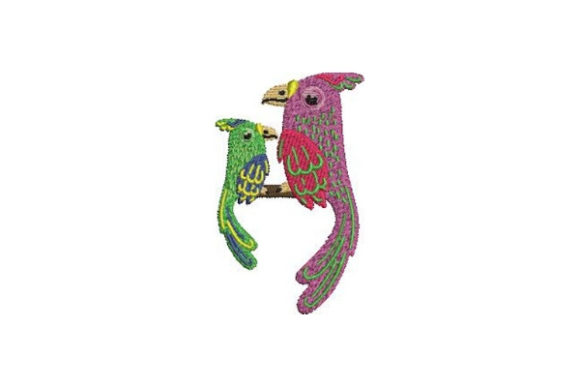
Mom and Baby Parrots: A Designer’s Real-World Embroidery Review
First Impressions: Charm with Clear Intent
When Mom and Baby Parrots loads into my embroidery software, the first thing that strikes me isn’t just the color—it’s the warmth. Two parrots, one slightly larger and gently cradling the smaller, beaks nearly touching, wings softly overlapping. It’s not cutesy or cartoonish; it’s tender, intentional, and quietly expressive. The composition fits naturally within a vertical 4x4 hoop, but doesn’t feel cramped—there’s breathing room between the birds’ feathers and the implied space around them. As a machine embroidery design, it leans into detail without overloading: subtle feather layering, gentle curve in the beaks, and soft gradations in the wing contours suggest thoughtful digitizing—not just auto-traced clipart.
A Real Project Test: Custom Baby Towel for a Boutique Nursery Line
Last week, I stitched Mom and Baby Parrots onto a 100% cotton tea towel for a local boutique’s spring nursery collection. We used medium-weight tear-away stabilizer and high-quality 40-weight rayon thread. On light fabric, the colors sang—turquoise, coral, buttery yellow—but more importantly, the stitch density held up beautifully. No puckering, no skipped stitches, and the satin-stitched edges on the beaks stayed crisp. Customers responded immediately: “That’s *exactly* the gentle, joyful vibe we want for baby gifts.” It wasn’t just decoration—it elevated the towel from utilitarian to heirloom-feeling. That’s the quiet power of a well-executed embroidery file like this one.
Where It Shines—and Where It Asks for Care
Mom and Baby Parrots is ideal for custom apparel and handmade products where emotional resonance matters: personalized baby onesies, embroidered patches for cloth diaper bags, sweatshirt embroidery for mom-and-me matching sets, or pillow covers for nurseries and pediatric waiting rooms. Its scale and shape make it a natural fit for tote bag design (centered above a pocket), aprons (left chest placement), and even holiday embroidery—think Easter or baby shower gifts.
But let’s be real: it’s not a “throw-it-on-anything” design. On thin or highly stretchy fabric—like lightweight jersey or ribbed knit t-shirts—you’ll need cut-away stabilizer and possibly basting stitches to prevent distortion. On dark fabric, test your thread colors first: some of the lighter fill stitches (especially in the baby parrot’s belly) can fade visually without enough contrast. And avoid placing it directly over seams or curved surfaces like cap crowns unless you’ve confirmed the hoop size allows clean rotation and tension control.
Stitch Behavior You’ll Notice in Practice
- Satin stitch areas (beaks, eye highlights) hold definition well—even at small sizes—but require sharp needles and steady tension.
- Fill stitch zones (wings, bodies) use moderate density—dense enough for coverage on textured fabrics like terry cloth, but breathable enough to avoid stiffness on baby-soft cotton.
- Running stitch accents (feather outlines, subtle shading lines) add dimension without adding bulk—ideal for items meant for frequent washing.
What This Design Does for Your Craft Business
If you’re an Etsy seller or small shop owner, Mom and Baby Parrots strengthens your brand consistency. It reads as handmade *and* professional—not mass-produced, but not amateur either. When customers see it on a finished product, they don’t just register “bird.” They register care, intention, and attention to emotional detail. That builds trust. It also increases giftability: people buy embroidered baby items because they want meaning, not just utility. This design delivers that—without needing extra text or branding.
For digital product sellers, it’s strong design assets material. Pair it with a simple monogram or birth date in a clean font, and you’ve got a scalable printable mockup series for social media or listings. Just remember: before listing it as part of a commercial embroidery bundle, confirm licensing terms—some versions may restrict resale of the digital embroidery file itself.
Practical Designer Notes Before You Stitch
- Always run a test on scrap fabric matching your final project’s weight and texture—especially if using textured fabrics like linen or terry.
- Check thread color contrast on both light and dark backgrounds. A printable mockup helps visualize this fast.
- Review stitch density in your software—if fill areas look overly heavy, consider reducing density by 5–10% for delicate fabrics.
- Confirm hoop size compatibility. While it fits standard 4x4 hoops, double-check if your machine requires re-hooping for multi-color runs.
- Inspect small details at 200% zoom: are the baby parrot’s feet fully digitized? Is the eye highlight legible at 2.5 inches tall? These details impact perceived quality.
- Use proper stabilizer—medium tear-away for stable wovens, cut-away for knits or stretchy blends.
- Test it in black and white. If the design holds visual interest without color, it’s inherently strong.
Final Thought: Not Just Another Bird Design
In the Birds category, many embroidery files default to bold, graphic silhouettes—or overly complex, fragile motifs that fray after two washes. Mom and Baby Parrots sits thoughtfully in the middle: detailed enough to feel special, balanced enough to endure, and emotionally resonant enough to connect. It works for personal projects, yes—but its real strength is how it lifts your entire product line. Whether you’re stitching a single personalized gift or scaling production for a craft fair booth, this machine embroidery design supports your voice as a maker. It doesn’t shout. It invites. And in handmade markets, that kind of quiet confidence sells.