My Machine is Calling and I Must Sew
A Craft Fair Designer’s Real-World Review
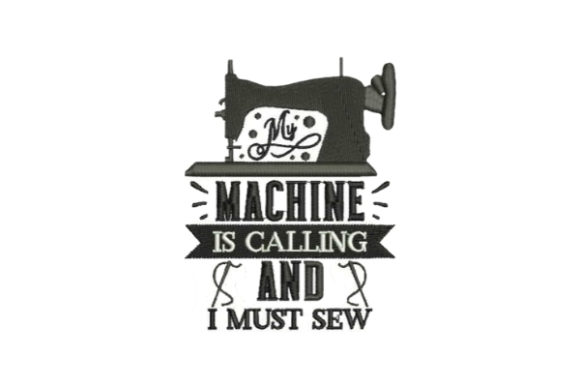
As an embroidery designer who’s stocked over 200 craft fairs—and shipped thousands of digital embroidery files to Etsy sellers, boutique makers, and small shop owners—I’ve seen what stops a shopper mid-aisle and what fades into the background. My Machine is Calling and I Must Sew lands right in that sweet spot: bold enough to spark a smile, clever enough to resonate with sewists, and versatile enough to shine across multiple handmade products. It’s not farmhouse-chic or minimalist—it’s warm, confident, and quietly witty. Think “handmade pride” meets “sewing joy”—a modern-casual vibe that reads instantly at booth distance.
Where This Design Wins on Real Craft Fair Products
On a crowded table full of embroidered tea towels, tote bags, and aprons, My Machine is Calling and I Must Sew stands out because it speaks *to* the maker *and* the customer. Here’s how it performs across key items:
- Tote bag design: Perfect as a centered chest or lower-front statement. The phrase flows well horizontally, scales cleanly, and reads clearly even from six feet away—ideal for shoppers scanning booths while holding coffee.
- Apron embroidery: Works beautifully above the pocket or along the waistband. Its rhythm feels intentional, not cluttered—adding personality without overwhelming the garment’s utility.
- Tea towel embroidery: Shines on linen or cotton blends. Because the phrase is rhythmic and moderately spaced, it avoids looking cramped on textured kitchen textiles—unlike dense script fonts that blur on terry or waffle weave.
- Embroidered patch: A top-tier candidate. Clean lines, consistent letter height, and balanced negative space mean it’ll stitch crisply at 3"–4", hold up to iron-on or sew-on application, and look sharp on denim jackets or market bags.
- Caps & curved surfaces: Proceed with caution. The full phrase may require careful digitizing adjustments for crown curvature—consider using just “My Machine is Calling” or a shortened version for caps unless your embroidery file includes optimized cap variants.
- Fabric pouches & pillow covers: Excellent as a subtle side accent or centered front motif. At 2.5"–3.5", it retains legibility and charm—making it a strong small shop product for gift sets or curated bundles.
Production Practicality: What Makes It Booth-Ready
This isn’t just a cute phrase—it’s a smart craft fair product engine. My Machine is Calling and I Must Sew is easy to understand at a glance, which matters when buyers have 3 seconds to decide. It works equally well as a medium-scale focal point (on totes or aprons) or a refined accent (on patches or pouches). For Etsy sellers and digital embroidery file creators, it photographs cleanly—no excessive shadows or stitch bleed—and converts well in printable mockups used for listings or social previews.
Batch production? Highly repeatable. The layout avoids extreme angles, overlapping letters, or micro-details that slow down hooping or cause thread breaks. That said—always verify stitch density before bulk runs. Dense fills or tight satin borders can cause puckering on lightweight cotton or stretchy knits. And if your version includes decorative flourishes (e.g., subtle thread loops or machine-stitched “stitch” icons), inspect those areas closely—they’re charming but may need stabilizer upgrades.
Careful-Use Notes Every Embroiderer Should Know
Even joyful designs demand respect for fabric and function. Here’s where attention prevents disappointment:
- Small lettering: If the embroidery file uses condensed or narrow fonts below 10 pt equivalent, test readability on dark fabric—especially navy or charcoal. Light thread on dark backgrounds can vanish without proper underlay or contrast checks.
- Textured towels & thick fabrics: Waffle-weave tea towels and canvas totes need firm cutaway or tear-away + topping combo. Skip lightweight tear-away alone—it won’t support clean letter edges on high-relief surfaces.
- Dense stitch areas: Look for tight kerning or overlapping elements in the “Sew” or “Calling.” High stitch density there may require reduced speed or added stabilizer layers to prevent fabric distortion.
- Curved surfaces (caps, pouches): Don’t assume the flat-hooped file translates seamlessly. Always do a physical test on scrap cap fabric—check for stretching, misalignment, or thread tension shifts.
- Clarity at smaller sizes: Below 2”, spacing and stroke weight matter more than charm. Confirm legibility at your smallest intended use—especially for patches or tag-sized accents.
Why This Design Strengthens Your Handmade Brand
My Machine is Calling and I Must Sew does more than decorate—it connects. At craft fairs, it invites conversation (“Oh, I love that—I sew too!”), signals authenticity, and elevates perceived value. Buyers don’t just walk away with a tote; they walk away with a shared identity. That emotional resonance makes it a stronger booth display piece than generic florals or abstract motifs. For Etsy sellers, it adds personality to product photos and helps listings stand out in search results for terms like “sewing lover gift” or “embroidered apron for makers.” As part of a cohesive line—paired with coordinating “Sew Much Love” or “Press Start” designs—it builds brand consistency without feeling repetitive.
Designer-to-Designer Checklist Before You Stitch
Before cutting your first stabilizer sheet or uploading to your embroidery machine, run through these must-do steps:
- Test the machine embroidery design on scrap fabric matching your final product (e.g., linen for tea towels, twill for caps).
- Check thread colors against your base fabric—especially for light-on-light or dark-on-dark combos.
- Review spacing between letters and words; adjust if needed for clarity on textured surfaces.
- Confirm hoop size compatibility—some versions may require larger hoops for optimal registration.
- Inspect stitch density visually and in software—if fill areas look overly saturated, consider reducing density by 5–10%.
- Use the right stabilizer: cutaway for stretchy knits, tear-away + topping for towels, fusible + tear-away for lightweight cottons.
- Create at least one real mockup—not just a digital preview—to assess drape, texture interaction, and true-to-life impact.
- Compare fabric colors side-by-side: natural light vs. indoor booth lighting changes perception dramatically.
- Verify commercial licensing status before selling finished products—this is essential for Etsy sellers and small shop owners offering ready-to-ship handmade goods.
When you get it right, My Machine is Calling and I Must Sew becomes more than a phrase—it becomes a quiet signature of craft, care, and contagious joy. And in a sea of sameness at the craft fair, that’s exactly what sells.