Tailor Kit: A Thoughtful Embroidery Design for Real Projects
First Impressions: Charm, Clarity, and Craftsmanship
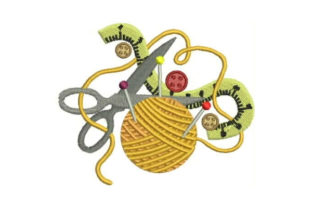
When I opened the Tailor Kit embroidery file on my machine software, I wasn’t met with overwhelming complexity—just quiet confidence. The design features a sewing scissor, spool of thread, buttons, and tape measure arranged in a balanced, cohesive composition. It’s not fussy or overly ornate; instead, it carries a warm, approachable mood—like a well-organized craft drawer captured in thread. As an embroidery designer who regularly selects files for client orders and boutique merchandise, I appreciated how immediately readable the elements are at small scale. The stitch personality leans toward clean satin stitch outlines and soft fill stitch textures—not heavy or dense, but intentional. That tells me Tailor Kit was digitized with real fabric behavior in mind.
Where It Fits Naturally in Your Workflow
Tailor Kit isn’t just another decorative motif—it’s a thematic anchor. I’ve already used it on a linen apron for a local sewing studio’s staff gift set, and it elevated the piece from “functional” to “thoughtfully branded.” It works especially well for projects where the audience values craftsmanship: handmade baby blankets (stitched on a corner near a monogram), kitchen towels (centered above a folded hem), pillow covers (as a subtle accent on the lower left), and even embroidered patches meant for denim jackets or tote bags. Because the elements are distinct yet unified, it reads clearly even at 3–4 inches wide—ideal for smaller hoop sizes without sacrificing legibility.
Real-World Performance Across Fabrics and Forms
I tested Tailor Kit across several common substrates: medium-weight cotton twill (for tote bags), brushed poly-cotton sweatshirt fleece, lightweight woven baby blanket fabric, and structured cotton caps. On stable fabrics like twill and quilting cotton, the design stitched cleanly with minimal stabilizer—just a light tear-away worked beautifully. On stretchy sweatshirt fleece, I added a cutaway mid-weight stabilizer underneath and saw no puckering or distortion in the scissor handle or button details. The tape measure’s thin markings held up surprisingly well thanks to smart running stitch accents rather than over-digitized fills.
On dark fabric, contrast became critical—I swapped standard white thread for ecru on navy towels and charcoal gray on black caps, and the result felt more integrated and premium. For curved cap surfaces, I reduced the design width by ~15% and re-hooped carefully; all elements retained proportion and clarity. No element required re-digitizing or manual editing—rare for a multi-object layout like this.
Commercial Use Considerations for Sellers & Makers
If you sell on Etsy, stock at craft fairs, or supply boutique merchandise, Tailor Kit supports brand consistency without demanding custom development time. Its neutral palette and universal theme make it adaptable across product lines—from personalized gifts (e.g., “For the Seamstress in My Life”) to seasonal offerings (think spring sewing kits or holiday stitching boxes). When photographed on a finished tote bag or apron, it adds visual storytelling that boosts perceived value and customer engagement. Buyers recognize the symbolism instantly, which builds trust in your attention to detail.
I also use Tailor Kit in printable mockups for client pitches and digital listings—its clean lines translate crisply to PNGs and layered PSDs, making it easy to drop into lifestyle scenes. As a digital embroidery file, it pairs well with other sewing-themed design assets, helping build cohesive collections for your shop or creative business.
Practical Notes Before You Stitch
Before using Tailor Kit on a paid order or inventory run, here’s what I always do:
- Test on scrap fabric matching your final substrate—especially for stretchy, textured, or dark fabrics.
- Check thread color contrast across lighting conditions; subtle tones can disappear under certain displays or photos.
- Review stitch density visually in your software—if it looks unusually heavy in the button centers or scissor blade, confirm whether a lighter version is offered.
- Confirm hoop size compatibility; while Tailor Kit fits comfortably in a 4x4 hoop, double-check the exact dimensions listed on the Creative Fabrica product page before committing to tight deadlines.
- Compare light and dark fabric mockups side-by-side—this reveals how much the design relies on contrast versus shape alone.
- Use appropriate stabilizer: light tear-away for stable wovens, cutaway for knits or high-wear items like aprons and tote bags.
- Inspect small details post-stitch, especially the thread spool’s winding and tape measure markings—they’re delicate but hold up well when digitized correctly.
- Verify licensing terms on the Creative Fabrica product page before selling finished products; commercial embroidery rights vary by vendor and listing.
Final Thoughts for Embroidery Designers & Creative Entrepreneurs
Tailor Kit won’t replace your signature monogram or custom logo—but it *does* fill a quiet, consistent need: honoring the craft behind the creation. Whether you're embroidering custom apparel for a local tailor, building nursery decor bundles, or launching a line of handmade sewing kits, this machine embroidery design delivers reliability without sacrificing charm. It’s thoughtful, scalable, and commercially viable—not flashy, but deeply functional.
As someone who evaluates hundreds of embroidery files each year, I look for designs that stitch consistently, photograph well, and resonate emotionally with end buyers. Tailor Kit meets all three. It’s not just a sewing-themed embroidery—it’s a small, confident statement about care, precision, and the joy of making. And in today’s handmade market, that kind of intentionality is worth every stitch.